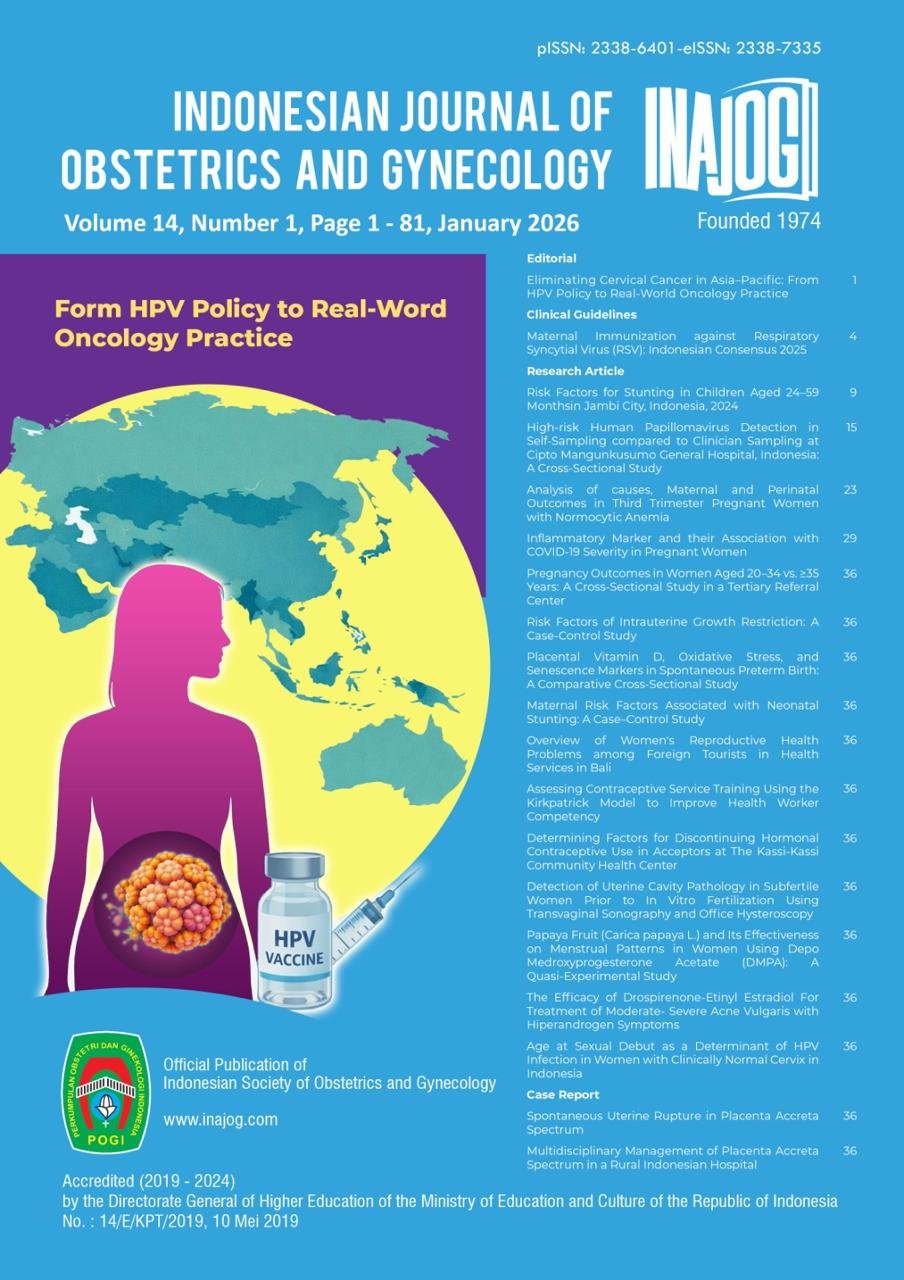
Analysis of Causes, Maternal And Perinatal Outcomes In Third Trimester Pregnant Women With Normocytic Anemia.
DOI:
https://doi.org/10.32771/inajog.v14i1.2311Abstract
Abstract
Objective : Analyzing the causes, maternal and perinatal outcomes in third trimester pregnant women.
Method :This research is a hybrid study which combines 2 research designs, namely descriptive analytical and observational with a cross sectional study approach to assess laboratory examinations of anemic pregnant women and a cohort to assess maternal & perinatal outcomes in third trimester pregnant women with normocytic anemia. Bivariate analysis was carried out using the chi square test to measure the strength of the relationship between variables. A complete blood count, ferritin, TIBC, serum Fe, reticulocyte and peripheral blood smear were carried out. This research was conducted on third trimester pregnant women with anemia.
Results :Of the 50 pregnant women who experienced normocytic anemia, there were (92,0%) mild anemia, (8,0%) moderate anemia and no severe anemia was found. Maternal and perinatal outcomes have a p value <0.05. Most pregnant women in the third trimester have low serum Fe < 37 µ/dL (52,2%) in mild anemia and normal serum Fe 37-148 µ/dL (75%) in moderate anemia, most have low ferritin < 13 ng/ dL in mild anemia (82,6%) and (100%) in moderate anemia, most high TIBC ? 389 µ/dL in mild anemia (87%) and (100%) in moderate anemia, all reticulocyte values ??are high (> 1,50%) in mild and moderate anemia.
Conclusion :Chronic diseases and infections were the biggest causes of normocytic anemia in third trimester pregnant women in this study, howeverNormocytic anemia in this study had a picture of serum ferritin and iron that almost resembled microcytic anemia, which was probably caused by iron deficiency, so it was necessary to examine C-Reactive Protein (CRP) as a biomarker/sign of infectious disease.The higher the degree of anemia, the greater the risk of birth problems, which will affect the birth process. Likewise with perinatal outcomes, the higher the degree of anemia, the greater the incidence of LBW and asphyxia in babies.
Keywords: Normocytic anemia, pregnancy, maternal and perinatal outcomes, serum Fe, ferritin, TIBC, reticulocytes
Downloads
Downloads
Published
How to Cite
Issue
Section
License
Copyright (c) 2026 Indonesian Journal of Obstetrics and Gynecology

This work is licensed under a Creative Commons Attribution-NonCommercial-ShareAlike 4.0 International License.