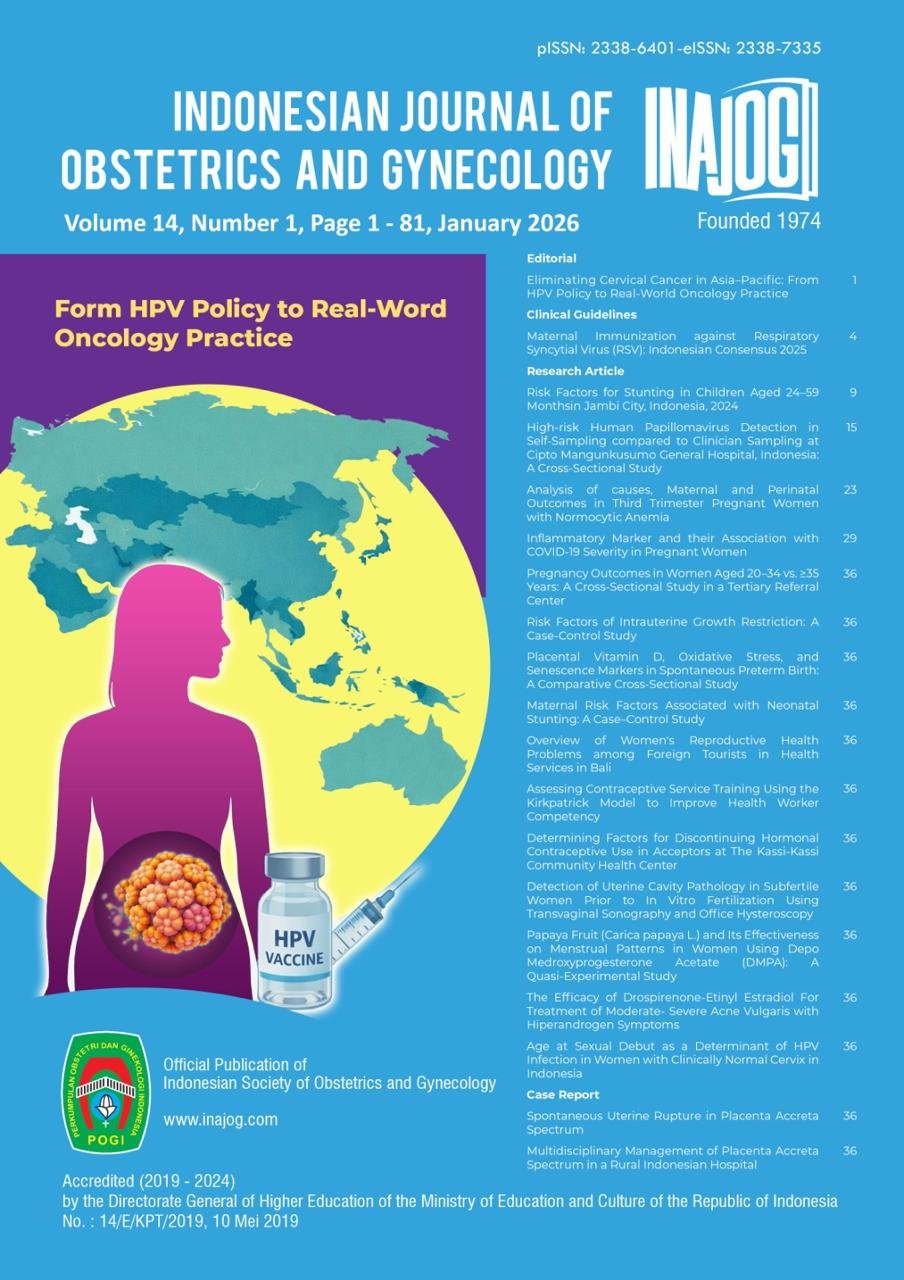
Eliminating Cervical Cancer in Asia–Pacific: From HPV Policy to Real-World Oncology Practice
DOI:
https://doi.org/10.32771/inajog.v14i1.3200Abstract
Cervical cancer remains a major burden in Asia-Pacific, with nearly 70% of women presenting at advanced stages and survival rates for metastatic disease as low as 17.6%. Despite WHO’s 90-70-90 targets for 2030, vaccination and screening coverage remain insufficient, and treatment capacity—especially brachytherapy—faces severe shortages, with a deficit of 904 machines in the region. Recent progress, such as school-based HPV vaccination programs and evidence supporting single-dose efficacy, offers hope, but prevention must be tightly linked with screening and timely treatment. Oncologists are urged to integrate vaccination histories into clinical records, promote HPV testing and self-sampling, and ensure guideline-concordant chemoradiation. Robust local data on stage distribution and treatment completion are essential to drive policy and funding. Ultimately, aligning HPV policy with oncology practice is critical to transform elimination from aspiration into reality within professional lifetimes.
Downloads
Downloads
Published
How to Cite
Issue
Section
License
Copyright (c) 2026 Indonesian Journal of Obstetrics and Gynecology

This work is licensed under a Creative Commons Attribution-NonCommercial-ShareAlike 4.0 International License.